
Inno4Vac Annual Meeting 2026 held in Leiden, The Netherlands
The Inno4Vac 5th Annual Meeting and its Subtopic satellite meetings were held from 29 September – 01 October 2026, involving more than 75 representatives from the project’s 39 Partner organisations. The event was co-organised by the European Vaccine Initiative (EVI) and Leiden University Medical Center (LUMC).
October 2026

The meeting was an opportunity to highlight progress made over the past year, showcase some of the consortium’s young scientists’ work, and to engage in targeted, in-depth scientific discussions to explore ideas and inform ongoing and future activities, especially during the subtopic satellite sessions.

A poster session was held, giving participants the option to display and discuss further results of their research. Consortium partners were invited to view and provide feedback on their favourite posters.
Lisa A. King from Leiden University Medical Center had the winning poster, titled “Establishing immune-competent nasal organoid models for respiratory infections,” detailing work done within Subtopic 3.

Members of the project’s Scientific and Ethics Advisory Committee (SEAC) were also in attendance, providing valuable feedback on the results presented to ensure the relevance and quality of the research being conducted, as well as impressing upon consortium partners the importance of ensuring sustainability and continuity of the diverse tools and results being generated by project activities. The external experts confirmed the substantial progress made by partners thus far, and encouraged continuing efforts to broaden the potential for uptake and further development of Inno4Vac outputs.
As in previous years, the project’s interlinked subtopics held individual satellite meetings, where in-depth discussions were held to advance progress toward specific project goals:
Subtopic 1 aims to develop an open-access, cloud-based platform for in silico assessment of vaccine immunogenicity. An overview of the platform architecture was provided, emphasizing its user-friendly design. In brief, the platform combines tools and models for predicting immunogenicity response based on in silico simulations. The streamline simulation pipelines is based on identified models from VAXPRED partners and included tools NetMHCpan-4.1, NetTCR-2.1, Hyphasma, Absolut!, immuneSIM, and immuneML. At present, the Subtopic 1 team is performing biological experiments that should contribute to refinement of the predictive tools to enable higher resolution.

Subtopic 2 is dedicated to the development of new and improved controlled human infection models (CHIMs) and to position them in the regulatory framework by addressing hurdles to regulatory acceptance in global vaccine development efforts. Major progress has been made in the development of the three CHIMs, with the successful set-up of the RSV-B CHIM in healthy adults that paved the path for the second RSV study in elderly that is expected to start in Q4 2026, the completion of the influenza challenge agent manufacture and the initiation of the clinical trial, and the expansion of the C. difficile study that is building on initially promising results. The clinical trial activities as well as the immunological analyses to be performed within the remaining project lifetime were highlighted. Further updates centered around the Final Stakeholder Meeting on CHIMs that aimed at addressing gaps identified through previous meetings and developing the final Inno4Vac recommendations.

Subtopic 3 made advancements in the development of in vitro 3D cell-based models for applications in vaccine research and clinical trials. In the meeting, scientists shared the progress in simulating pathogen-immune interactions in these systems, with focuses on gastro-intestinal, urovaginal, and respiratory systems. The next steps needed to validate the models were discussed, considering the scientific outcomes, protocol standardization, and regulatory acceptance. A key outcome of the meeting was a detailed discussion between the model developers and the CHIM trial organizers in Subtopic 2 to align on how clinical samples from the trials can be best utilized by the models. The Subtopic 3 leaders also engaged in planning for ensuring the long-term availability and utilization of the models beyond the Inno4Vac project lifespan.
Subtopic 4 largely concluded activities in September 2025, but some of the work continues on in the form of COOP-VAMM – extended activities added via the Inno4Vac Project’s Open Calls process and presented by Hannah Lanzrath of Forschungszentrum Jülich during the plenary sessions
A major focus was the sustainability of the assets developed by the Inno4Vac beyond the project lifetime. Advanced project- and subtopic level sustainability plans were presented and discussed, including mechanisms by which project outputs can be maintained and kept available, as well as potential links to other ongoing initiatives. The Inno4Vac team was encouraged by the SEAC to further build on and monitor the activities.
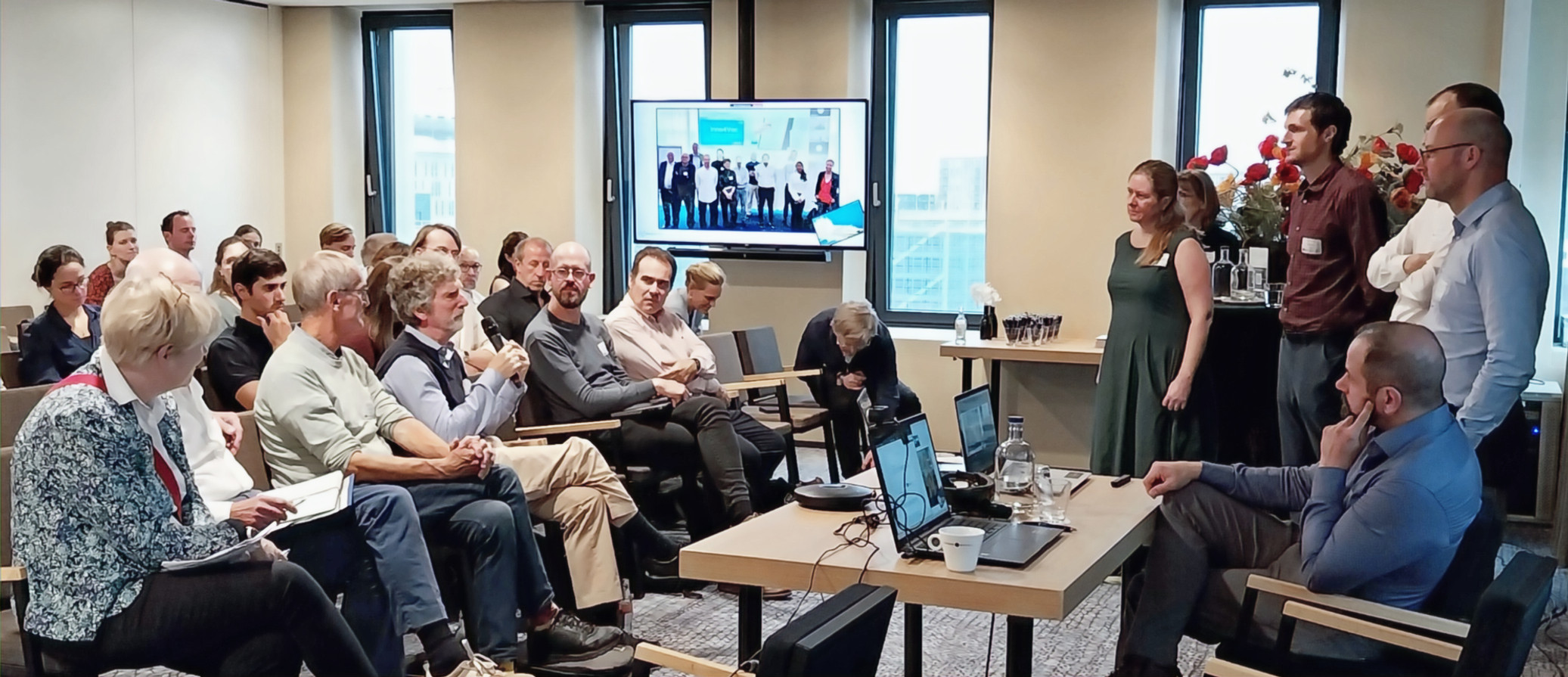
The three days of meetings concluded with a positive reception of the past year's progress and the plans for the future. Partners were imparted by the SEAC with encouragement to continue to advance the project's goals as Inno4Vac draws to a close over the next 18 months.

This project has received funding from the Innovative Medicines Initiative 2 Joint Undertaking under grant agreement No 101007799 (Inno4Vac). This Joint Undertaking receives support from the European Union’s Horizon 2020 research and innovation programme and EFPIA (www.imi.europa.eu). This communication reflects the author´s view and neither IMI nor the European Union, EFPIA, or any Associated Partners are responsible for any use that may be made of the information contained herein


Comments